Verified commercial providers
5 Best Commercial Pest Control Companies in Salt Lake City, UT
Compare Salt Lake City providers on commercial focus, certifications, and analyzed reviews — then request quotes from the ones that fit your business.
Finding Commercial Pest Control in Salt Lake City
The Salt Lake City metro area has 43 pest control companies. We've verified 5 that offer dedicated commercial services — 5 local and regional providers and 0 national brands. Of these, 5 hold professional certifications such as QualityPro, GreenPro, or food safety credentials like AIB and HACCP.
Salt Lake City's high-altitude semi-arid climate — averaging 51°F with 53% humidity — drives a compressed but intense pest season from late spring through early fall, with rodents and stored product pests remaining active year-round as they seek shelter from harsh winters. The most common commercial pests in the area include rodents, spiders, ants, stored product pests.
Pest Sanity helps businesses in the Salt Lake City metro area find the right commercial pest control partner. Whether you manage a restaurant, warehouse, office building, or healthcare facility, our directory makes it easy to compare verified providers side by side. Below you'll find detailed company profiles, industry specializations, certification details, our review methodology, and Utah licensing requirements to help you make an informed decision.
Salt Lake City Commercial Pest Control Companies | 5 Options
Local & Regional Providers
5
Protect your home with Saela Pest Control's expert residential services. Say goodbye to pests and hello to peace of mind. Get your quote today!
Industries Served
 BBB
BBB NPMA+1
Learn how Sprague Pest Solutions contributes to communities by providing expert pest control and prevention services.
Industries Served

The requested page was not found on this server.Error generated by Oak.
Industries Served
NPMA QualityPro+1
404. Let our qualified Ogden Pest Control help you get your residential or commercial pest infestation under control. Call Mountain West Pest Control!
Industries Served
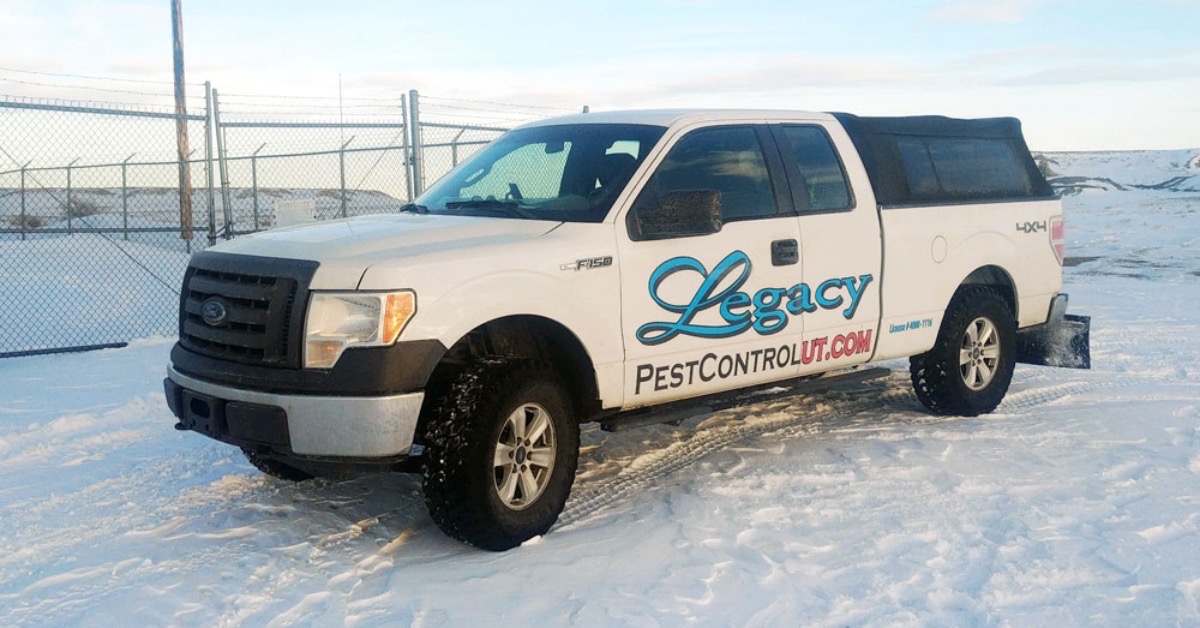
For over 20 years, Legacy Pest Control has been providing Utah with the best Pest Control & Extermination services from Ogden to Salt Lake City - Free Inspections!
Industries Served
QualityPro SQF
SQFOur Methodology
Pest Sanity independently researches and verifies every provider on this page. Our goal is to help Salt Lake City businesses make informed decisions — not sell paid placements.
Discovery & Verification
We identify providers via Google Maps data and public listings. Each is verified to offer dedicated commercial services.
Commercial Focus Scoring
Every provider is scored 0–10 on commercial signals: dedicated pages, industry sub-pages, certifications. Score 3+ to be listed.
Review Analysis
Google Reviews analyzed across 9 quality dimensions. Scores compared against national averages to surface standout providers.
No Pay-to-Play
Listings are ranked by data quality, not payment. Companies cannot pay to appear higher or remove competitors.
Sources: Google Maps, company websites, Census County Business Patterns (2022), Google Reviews. Last updated March 2026.
What customers say about Salt Lake City providers
4,722 Google reviews across 5 providers, compared to national averages.
Salt Lake City providers score above average in 1 of 9 quality categories. Average rating: 4.83 stars.
Source: Google Reviews analysis via PestSanity.com.
The Salt Lake City pest control market
A moderately competitive market— more competition means better options for commercial customers.
Census County Business Patterns (2022). Ratings from Pest Sanity data.
Common commercial pests in Salt Lake City
Based on regional pest pressure patterns and climate conditions.
Rodents
The Mountain West's extreme winter temperature swings make commercial buildings irresistible harborage for deer mice and house mice. Deer mice are especially problematic as confirmed carriers of hantavirus, endemic to the intermountain West. Low humidity accelerates drying of droppings into airborne dust, increasing inhalation risk in warehouses. Facilities see sharp autumn surges as mice migrate indoors ahead of early freezes.
Most affected: Warehousing, Food Processing, Restaurants, Healthcare, Office Buildings
Spiders
The dry, low-humidity climate creates ideal indoor conditions for hobo spiders and, in southern Colorado, brown recluse spiders. Both thrive in undisturbed commercial spaces — storage rooms, mechanical closets, seldom-used offices — where arid air keeps webs intact for months. Rapid temperature swings push spiders indoors earlier than in milder zones, creating liability from medically significant bites.
Most affected: Warehousing, Hotels, Office Buildings, Healthcare, Retail
Ants
Pavement ants dominate Mountain West commercial properties, exploiting concrete and asphalt that absorbs intense high-altitude sun. Colonies nest in expansion joints and foundation cracks, emerging explosively during the short warm season from May through September. Carpenter ants target structures where snowmelt or irrigation creates localized moisture pockets in otherwise dry wood framing.
Most affected: Restaurants, Office Buildings, Retail, Healthcare, Property Management
Stored Product Pests
Climate-controlled commercial interiors create perfect micro-environments for Indian meal moths, flour beetles, and grain weevils despite the region's low ambient humidity. Food processing and distribution facilities along the I-25 and I-15 corridors are particularly vulnerable. Temperature differentials between outdoor cold and heated interiors generate condensation that sustains infestations.
Most affected: Food Processing, Warehousing, Grocery, Bakeries, Restaurants
Termites
Subterranean termites adapted to arid soils are well-established in the Mountain West. They follow moisture pathways along foundation footings, irrigation lines, and utility penetrations. Cold winters slow but do not eliminate activity, as colonies build below the frost line. Denver and Colorado Springs sit in a moderate termite pressure zone where low perceived risk means many properties go uninspected.
Most affected: All commercial properties
Wasps & Yellow Jackets
The Mountain West's short intense summers produce aggressive yellow jacket and paper wasp populations peaking from July through September. High-altitude UV intensity and warm dry conditions favor rapid colony growth. By late summer, colonies scavenge aggressively near outdoor dining and food service as natural food sources dry up in the arid landscape.
Most affected: Restaurants, Hospitality, Events, Office Buildings, Property Management
Pest pressure in Salt Lake City
Salt Lake City's high-altitude semi-arid climate — averaging 51°F with 53% humidity — drives a compressed but intense pest season from late spring through early fall, with rodents and stored product pests remaining active year-round as they seek shelter from harsh winters.
Open-Meteo Historical Archive (2023).
Utah Pest Control Licensing & Regulations
All commercial pest control companies operating in Salt Lake City must comply with Utah state licensing requirements.
Regulatory Body
Utah Department of Agriculture and Food, Division of Plant Industry
License Type
Commercial Pesticide Applicator License
Requirements
Commercial operators must pass a core exam and category-specific exams. Licenses are renewed annually with continuing education credits required. Businesses must maintain a Pest Control Business License and carry liability insurance.
5 of the 5 providers listed on this page hold additional professional certifications beyond Utah licensing, such as QualityPro (NPMA's highest credential, held by fewer than 3% of pest control companies nationally).
Other Cities in Utah
Nearby Cities
Commercial pest control in metros near Salt Lake City.
Frequently Asked Questions
How many commercial pest control companies serve Salt Lake City?
43 pest control companies operate in the Salt Lake City metro area (Census Bureau, 2022). This page features 5 verified providers, including 5 local and regional companies and 0 national brands.
How often should my Salt Lake City business be treated for pests?
Monthly service is standard for restaurants and food service operations. Quarterly is typical for offices and retail. Salt Lake City's warm-season pest pressure with winter rodent activity means monthly service is recommended for most food-handling businesses.
What are the most common pests in Salt Lake City commercial properties?
The most common commercial pests in Salt Lake City are rodents, spiders, ants, stored product pests. Climate and humidity patterns support persistent pest activity across commercial property types.
What should I look for when choosing commercial pest control in Salt Lake City?
Verify Utah state licensing, look for industry certifications like QualityPro (held by ~3% of companies nationally), ensure they have experience with your industry, and ask about their IPM approach. 5 of 5 providers on this page hold professional certifications.
Should I choose a local or national pest control company?
Both have advantages. Local and regional providers (5 in Salt Lake City) often offer more personalized service and competitive pricing. National brands (0 in Salt Lake City) provide standardized protocols and multi-location coverage. The best choice depends on your business size and needs.